Blog / Games / HL-055 ·

All Hands
The office fighting game, starring you and your colleagues. The stapler has never been this useful.
- Game
- Live Oct 2026
- Web
- Lab pick
What it is (besides an HR incident)
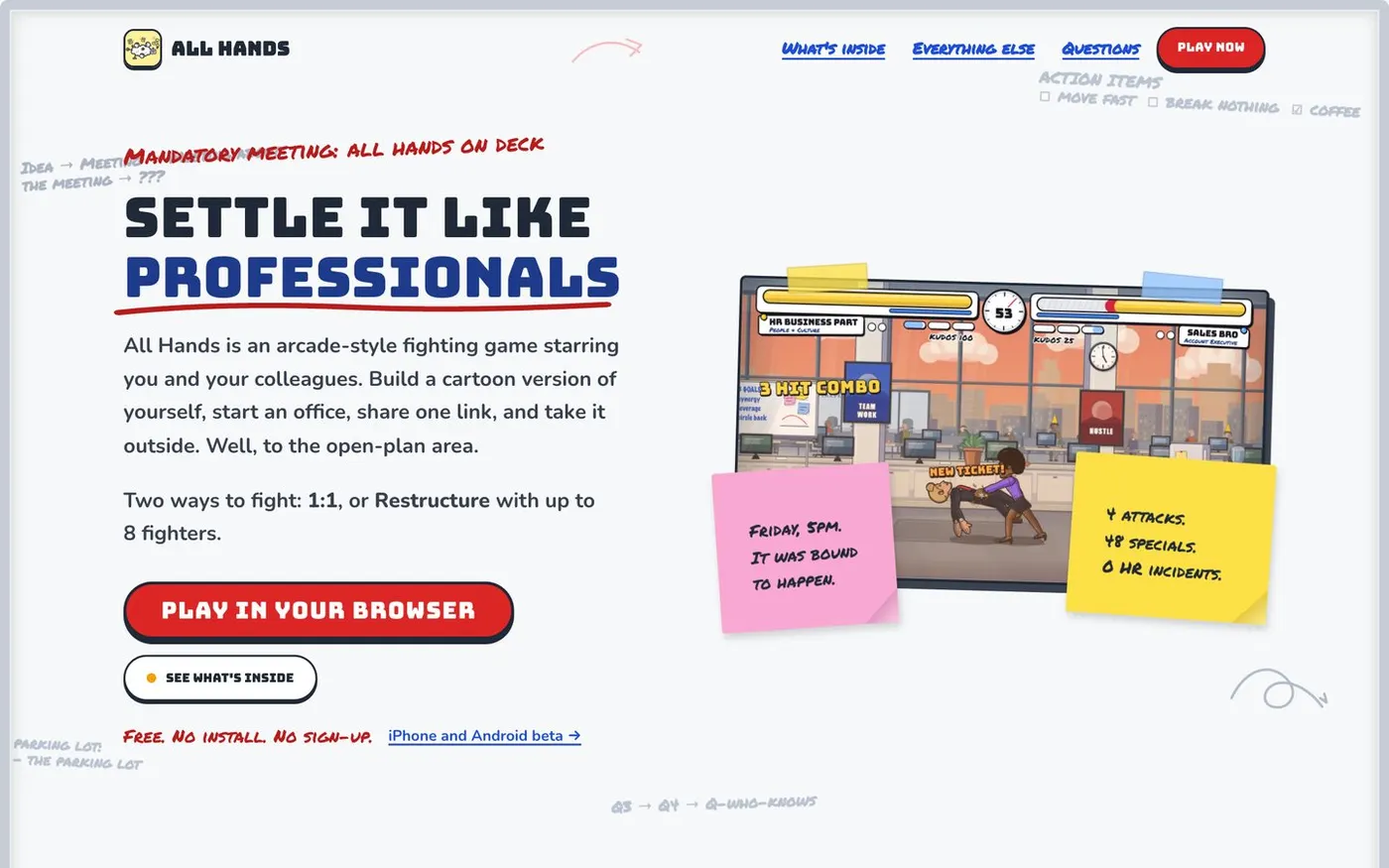
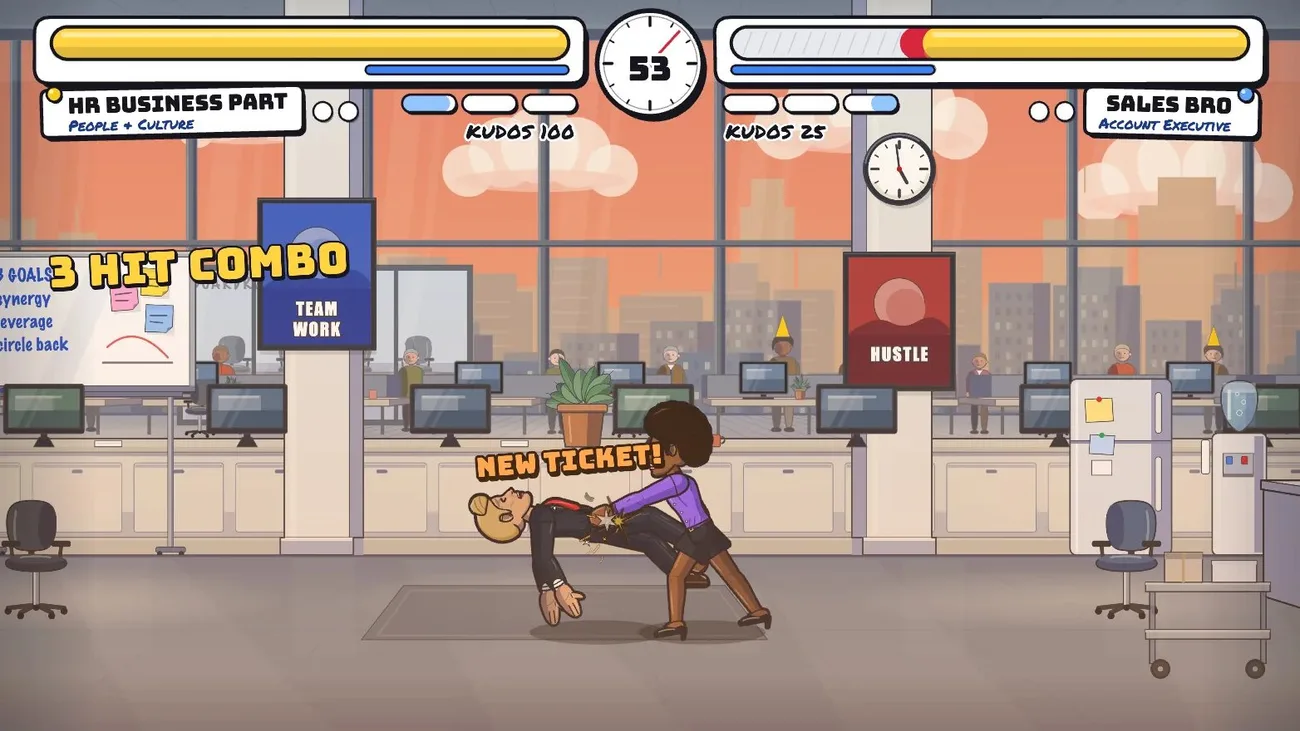
All Hands is a 2D arcade fighting game set in your actual workplace. You build an avatar that looks like you from a paper-doll kit of faces, 21 hairstyles and a wardrobe of business casual. You set up your office, then send a colleague a fight link. They tap it and they're in. No download, no sign-up, so no time to think up an excuse.
The moves are office-flavoured: the Stapler Volley, the Coffee Dash. Underneath sit proper fighting-game mechanics, such as frame data, guard crush, counter hits and supers. There are also Tradie Site and School packs, for people who'd rather hit someone with a clipboard.
Who it's for
Teams who need five minutes of fun on a Friday afternoon. Anyone who has ever thought "this meeting could have been a fight." And people who don't play fighting games. The touch controls are a stick, four buttons and a separate Throw button, because pressing two buttons at once on glass is harder than it sounds.
How it was built
The fight runs on a deterministic simulation: the same button presses always give the same fight. It uses whole numbers only, with no dice and no clocks. A whole fight's state fits in 2.6 KB, which is smaller than the email inviting you to it. Any fight can be replayed exactly from the button presses alone, and the server replays it before paying you in the game's currency. That currency is Annual Leave, measured in hours. Yes, really.
Because every fight repeats exactly, two phones can fight live using rollback netcode. Each phone guesses up to eight frames ahead and quietly fixes things when the real input arrives. When your colleague is "in a meeting", you fight their ghost instead: an AI built from their last eight fights, which copies their habits, bad ones included.
The stack is TypeScript, PixiJS 8 for drawing and React for the menus, shipped to the web, iOS and Android from one codebase. We looked at the Godot game engine and backed away slowly. Its web build is 30–40 MB, about the size of the quarterly report nobody reads.
Lessons learned
- Keep a decision log that marks which calls were yours. The AI made dozens of design calls, and the log flags the few a human confirmed, so the rest can change without a meeting about the meeting.
- Turn your rules into automatic checks. "Never use random numbers in the fight code" isn't a polite request; a checker fails the build if any code breaks it, and robots respect a red light.
- Test what happens after an update, not just before. One change to over-the-air updates made the app reload forever, and stuck phones couldn't download the fix because they kept restarting.
- Pick one strict rule that pays for many features. Replays, cheat checks, ghosts and live fights all came from "same inputs, same fight", which is more agreement than most offices manage about the dishwasher.