Blog / Home / HL-061 ·
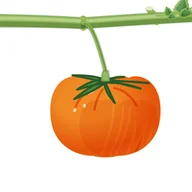
Dwarf Tomato Trellis
Trace every dwarf tomato back to its heirlooms. A family tree for fruit, which is still easier to follow than ours.
- App
- Home
- Live Nov 2026
- Web
What it is (besides tomato nerdery)
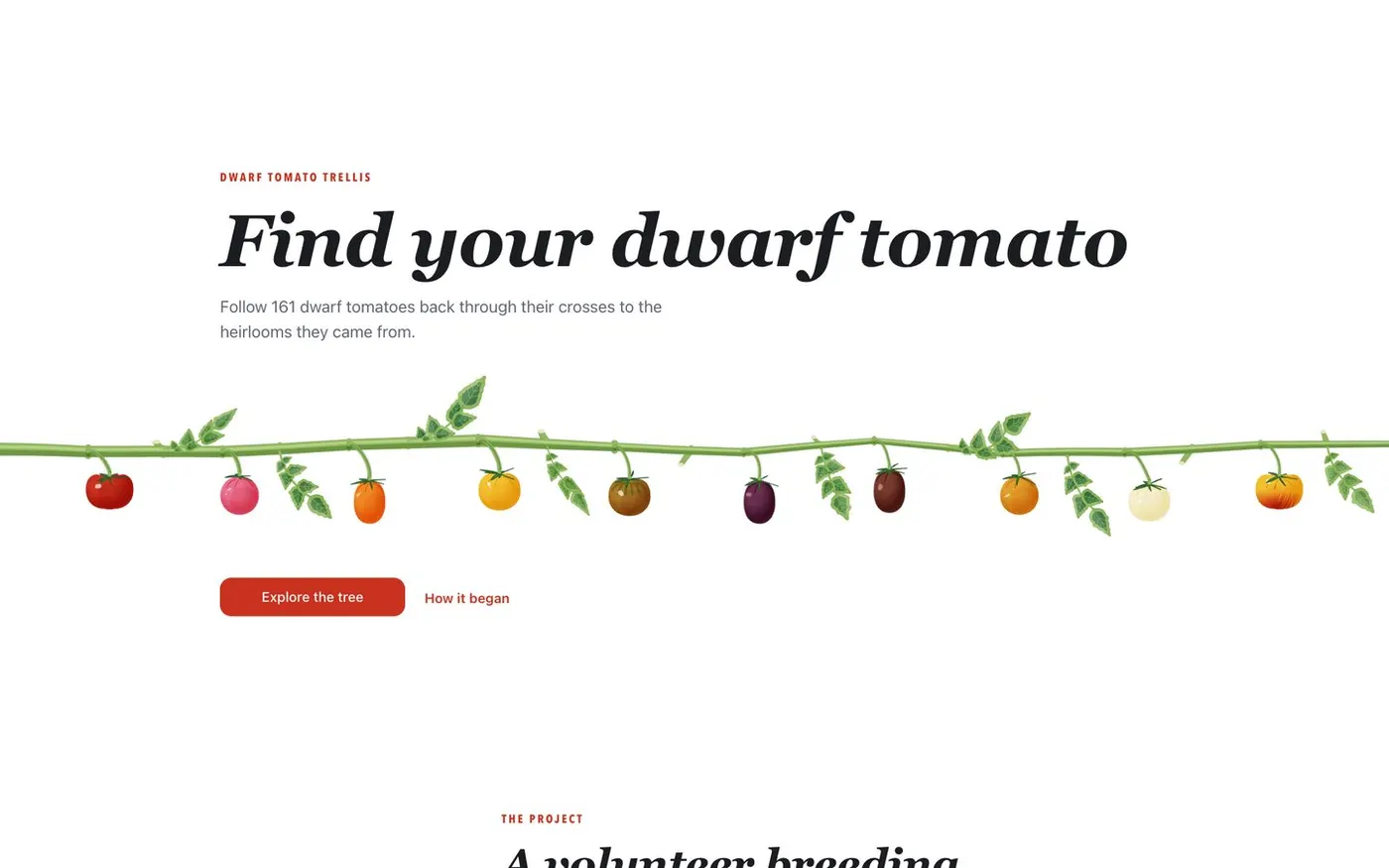
Dwarf Tomato Trellis lets you explore the Dwarf Tomato Project's family tree and trace every dwarf tomato back to its heirlooms. Dwarf varieties come from long chains of crosses, and this puts them on one screen. Search for a variety and see its parents. The tree opens zoomed in, with the leaves showing.
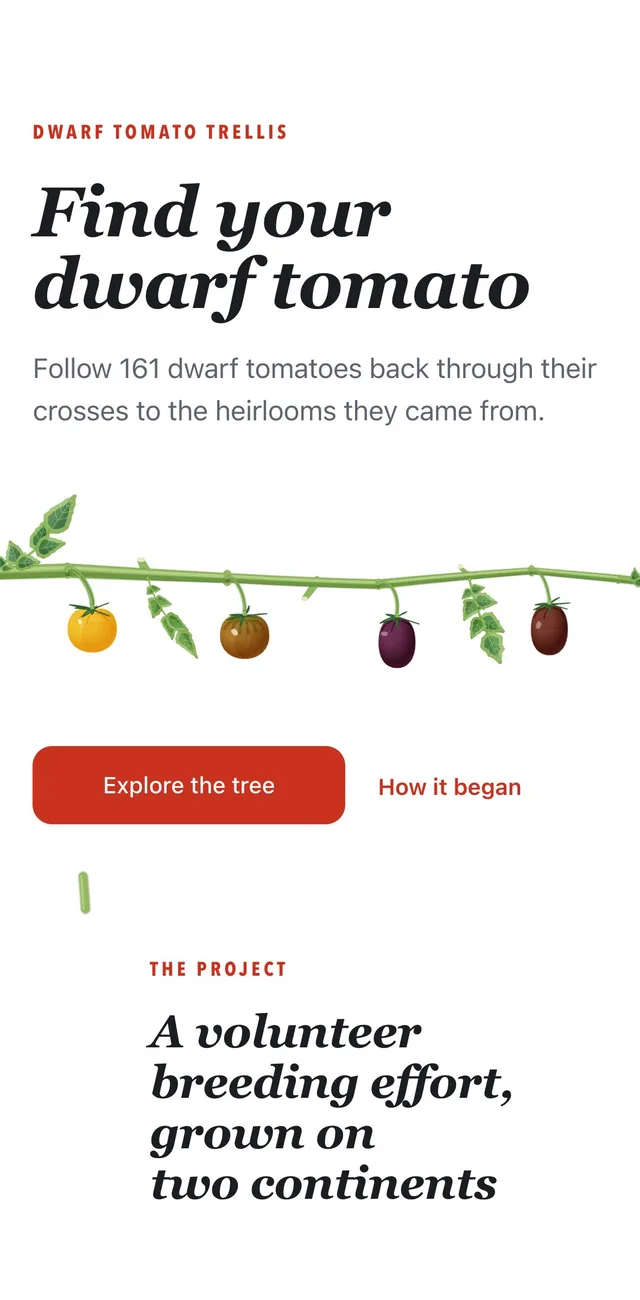
The family line is drawn as a single painted vine, oldest plants at the top, with fruit hanging off it. Each tomato is painted to look like its variety, with ribbing, green shoulders, blush and streaks. A "Grow a line" screen lets you breed your own, with a stripe-colour and gene view. For people who label their plants, there are printable tags, including sets for laser-cut stakes, a zip of label strips, and start-at-position printing for half-used sheets.
Who it's for (people who name their seedlings)
Gardeners who grow dwarf tomatoes, seed savers, and anyone who has stared at a seed packet and wondered who its grandparents were. It runs on iPhone and the web. Android is left out for now because it's untested on this build.
How it was built
It's a Next.js and TypeScript app shipped as one container (a sealed bundle the server runs as is), with a demo mode that uses sample data. The only thing that leaves your device is Google Analytics usage data, and the store listing declares it.
The variety data matters most. Traits for 80 varieties each come from the project's own page, either its words or its photo, or from a named source. When the words and the photo disagreed, the trait was left out. A later check against a seed seller's descriptions fixed 14 entries for colour, stripes, shape and ribbing. Even tomatoes get fact-checked here.
Lessons learned
- Make the agent name a source for every fact. Each trait has a quote or a named source, which made the later cross-check possible, and a clash meant leaving the trait out.
- Expect several rounds on how things look. The leaves pointed up, then level, before finally arching out and down, because "drooping" had been done with a rotation in the wrong direction.
- Draw the data as the thing it is. A family tree is a vine, so the page paints one, oldest plants at the top.