Blog / Business / HL-054 ·

Cansdale
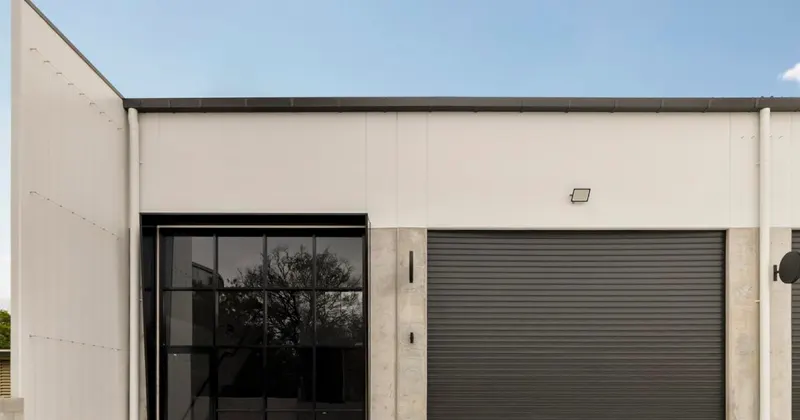
Three warehouse units in Yeronga. Type your name and see yours fitted out. Your business name, in lights. Well, on a roller door.
- Web tool
- Business
- Live Oct 2026
- Web
What it is (besides a very polite sales pitch)
Cansdale is a personalised web page for three new warehouse units in Brisbane. You type your business name and the page fits out a unit for you. Your name appears signwritten on the roller door in a real photo of the building. There are six sign styles (signwriter, stencil, studio script, brewery, modern and graffiti), three colourways, and the option to upload your own logo.
Then it gets practical. Enter the rent you pay now, and the page compares renting with owning, using Queensland transfer duty and a ten-year chart. Every figure is labelled "Estimates only", with a nudge to speak to your accountant. From there you can share the page, book an inspection or download a one-page PDF.
Every view, share and enquiry reaches the selling agent as a lead. That's the whole point of the thing. Flattery, it turns out, is a sales channel.
Who it's for (anyone with a shed and a dream)
Small business owners who rent a shed today and wonder what owning one would be like: car collectors, boutique gyms, creative studios, detailers, online shops and micro-breweries. They arrive on a phone from a text message or an Instagram link, often while standing somewhere else. Later, an accountant or partner opens the shared link on a laptop and asks the hard questions.
The job is to show someone, in under 30 seconds, their own name on this building and what owning costs against the rent they pay now.
How it was built
It's a web-only app built with Vue and Ionic, with a small server that makes the PDFs, sends the emails and runs the agent's side. The look borrows from a registered survey plan: lot circles, a north point, a scale bar, a title block and small spaced-out capitals. Over that sits full-width photography. The rule was that the business name on the building is the flourish, and no survey figures get invented.
The money maths is its own plain module with no outside code. It uses Queensland's duty brackets, checked against the published rates, and each bracket's base figure reconciles with the one below it. Blanks and negatives become zero, so it never shows "NaN" (computer for "I have no idea"). The sign is placed using the photo's own pixel grid, so it stays lined up on the door however the photo is cropped.
Speed was a stated target: a mobile Lighthouse score above 90. The commit history shows rounds of "verify fixes" for touch targets, text overflow and contrast, plus late changes to load the code in smaller chunks and hold back the signage until it's needed.
Lessons learned
- Ask the AI for options before you pick a look. The first brief pinned one palette and font; later it was loosened, several directions were compared on a design canvas, and the winner combined two of them.
- Check the AI's maths against the official source. The duty brackets were checked against the published rates, and every bracket's base figure reconciled with the one below it.
- Run an automated checker after each round of changes. Commits marked "Verify passed" or "Verify fixes" caught small things like button sizes and heading order that nobody had asked about.
- Write what you won't invent into the brief. "No invented survey figures" kept the survey-plan look from filling the page with fake precision.