Blog / Sport / HL-060 ·
Hoop Twin
Snap a selfie and meet your NBA or WNBA twin, drawn as a caricature trading card. Proof you look like a professional athlete, if you squint and wear a headband.
- App
- Sport
- Live Nov 2026
- Web
What it is (a group-chat weapon)
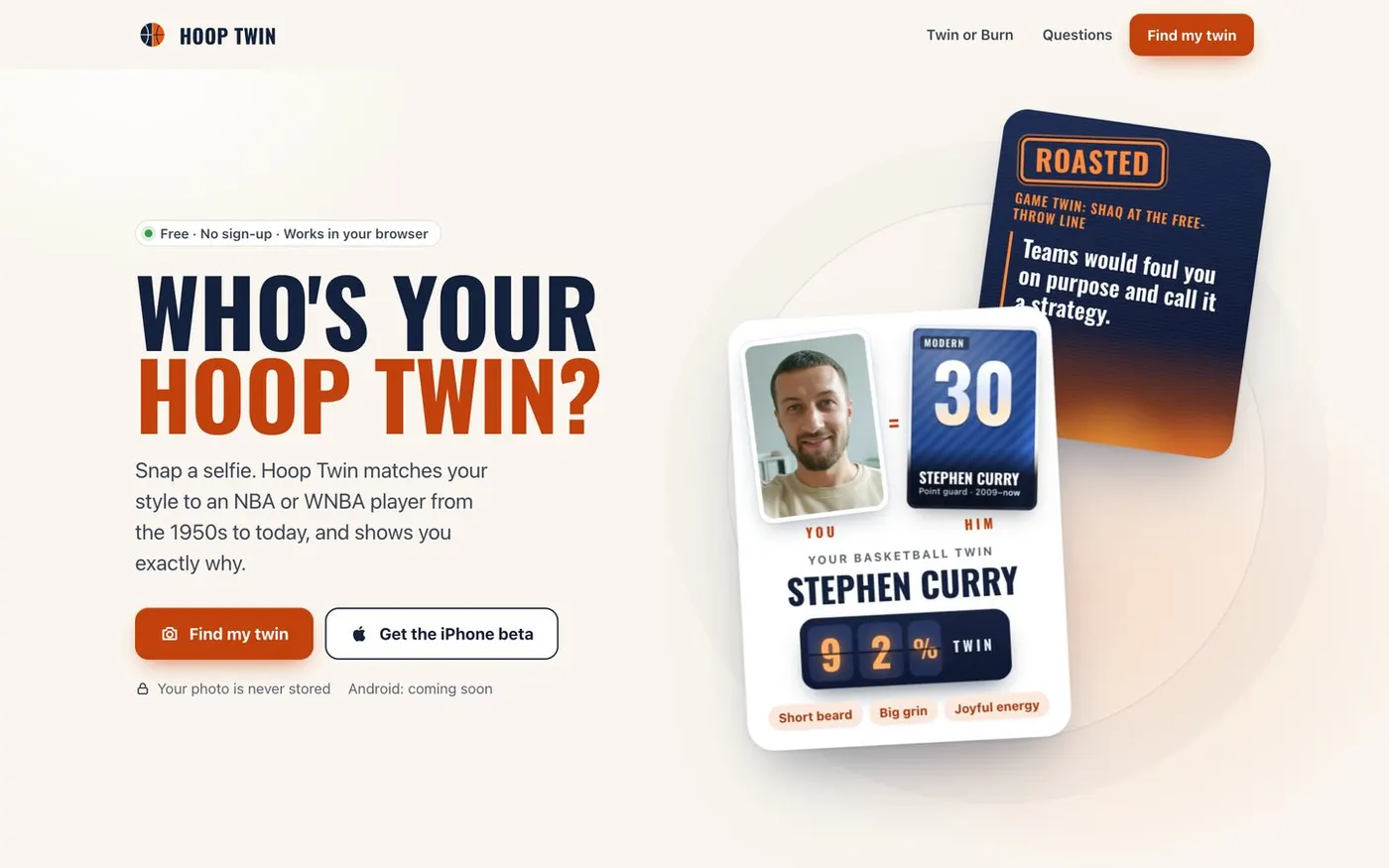
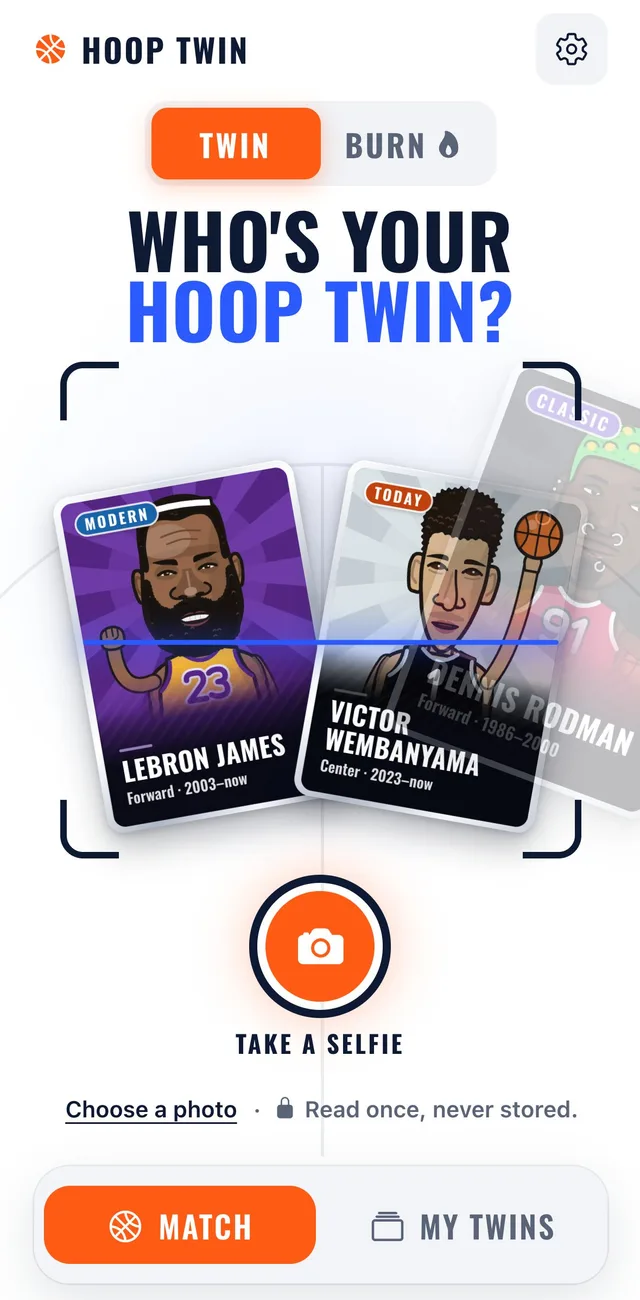
Hoop Twin settles the argument about which basketball player your mate looks like. Take a selfie or pick a photo, and it names the NBA or WNBA player whose signature look is closest to yours: the beard, the goggles, the headband, the afro, the grin. You get a match score, the reasons you match, two runners-up and a trading-card caricature to share.
It matches on visible style, not face shape. It describes hair, facial hair, eyewear, headwear, expression and vibe, then scores those against a hand-tagged table of about a hundred players chosen for iconic looks. Skin tone, ethnicity, age and gender are never read or matched. Scores always land between 72 and 98 percent, so nobody is ever told they're a 0% match for anyone. Your history keeps only the result, never your photo.
There's no account and no ads. The app isn't affiliated with the NBA and says so in About and in the store text. The name leaves the league out, because trademark lawyers don't have a sense of humour.
Who it's for (anyone with a headband and a dream)
Basketball fans, teens and adults, and anyone who wants to be told they look like a legend. It's free and doesn't try to learn your face.
How it was built
The first version sent the selfie to an AI vision model to describe the look, at about US$0.002 a go, then threw the photo away. That step later moved onto the phone itself, using an on-device image model, so the photo never leaves your hand. The privacy text, security rules and settings copy were updated to match.
Before launch, the first design got guards: photos shrunk before sending, a size limit, and a cap on how many matches anyone could run. The same photo always gives the same answer, with ties broken the same way every time.
The player cards are hand-drawn caricatures, added in batches.
Lessons learned
- Put a spending cap in before launch. The first design limited how many matches each person could run, so a viral afternoon couldn't turn into a surprise bill.
- When the AI changes how something works, make it update every sentence that describes it. Moving the photo step onto the phone came with new privacy text, security rules and settings copy, so the app still tells the truth.
- Test new data against ordinary people. After the women's league was added, clean-shaven and hair-down selfies got pulled toward long-haired men, and a scoring fix followed.
- Show the reasons, not just the answer. The riskiest assumption was that matches wouldn't feel fair, so every result lists why.